What the Bus Schedule Shows — and What the Jury Did Not See
Did You Know?
What the Bus Schedule Shows — and What the Jury Did Not See
In the trial of Dieneba Traore, specific pieces of publicly available information were referenced in testimony but were not provided to jurors during deliberations. Among them was a Regional Transportation Agency (RTA) bus schedule—an official public record that outlines exact stop times along Route 403.
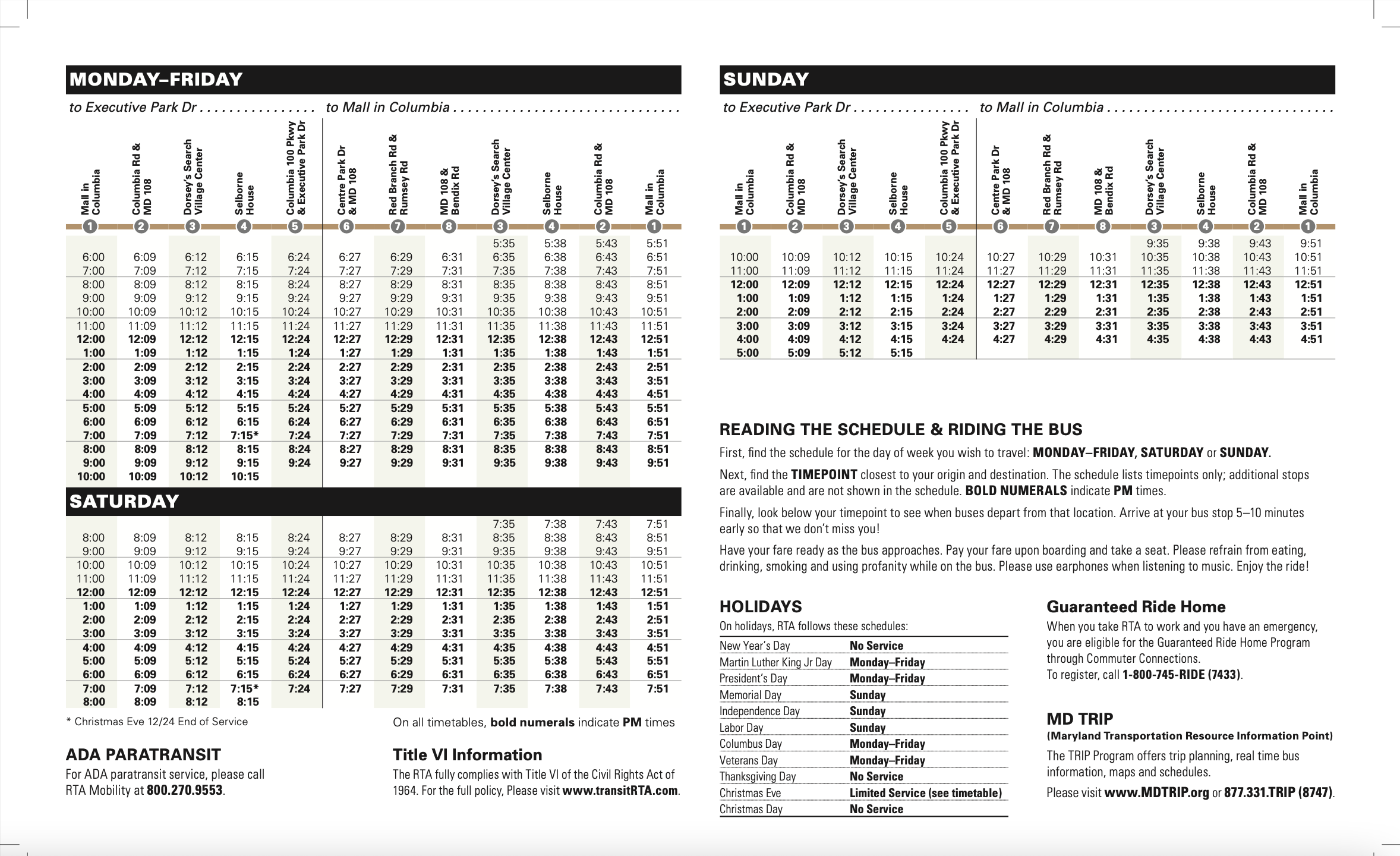
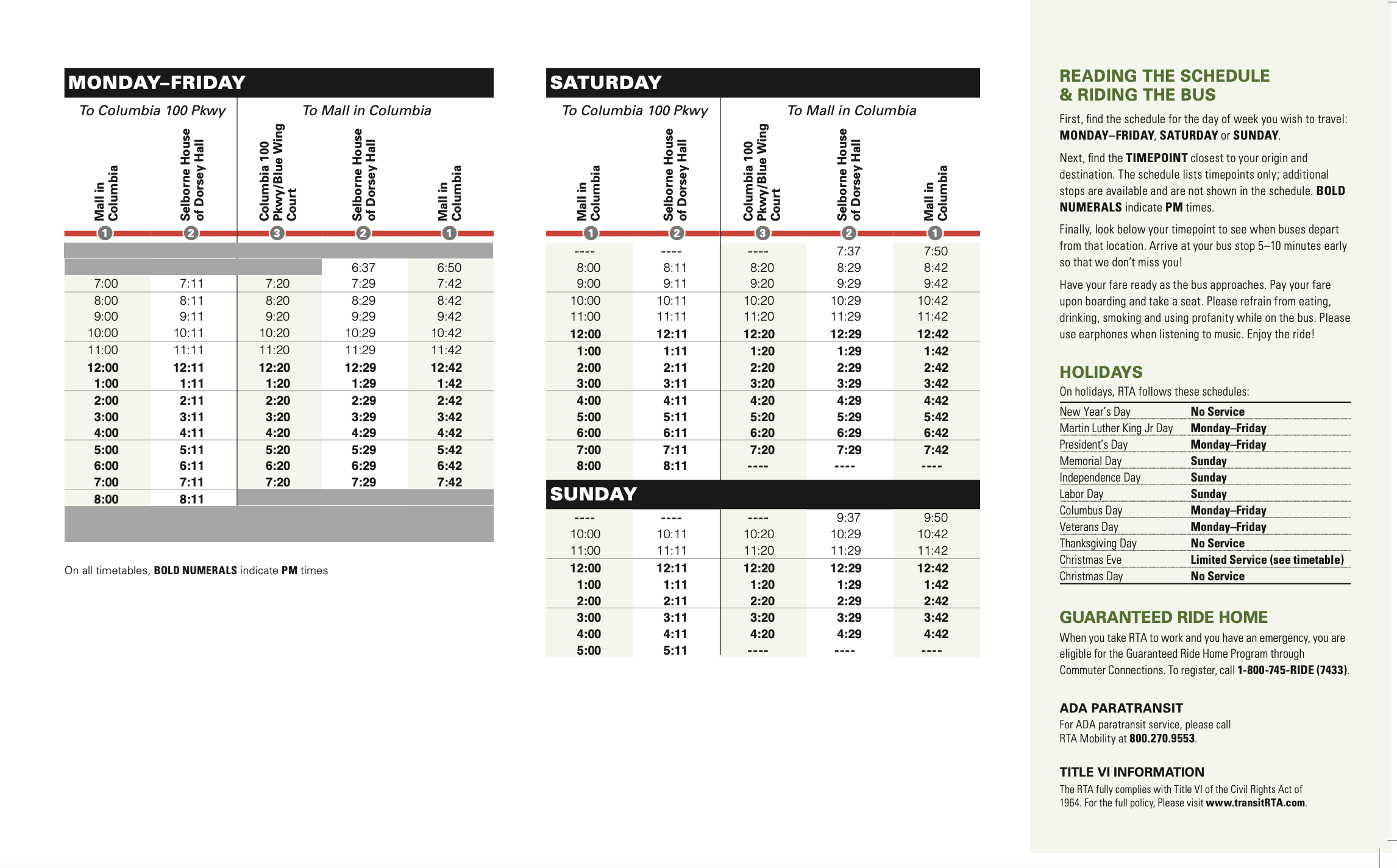
According to trial transcripts in State v. Traore, a State witness testified under oath that he was leaving to catch a bus on a Saturday evening. However, the corresponding RTA schedule for Route 403 establishes the final available departure times for key stops along that route.
Below are the relevant portions of the official schedule.
Route 403 – Saturday Last Stops
Columbia 100 Pkwy / Blue Wing Ct — Last scheduled stop: 7:20 PM
Centre Park Dr & MD 108 — Last scheduled stop: 7:27 PM
The RTA schedule shows that on Saturdays, buses servicing these stops do not operate beyond these times. This establishes the final possible boarding window for passengers at those locations.
During trial proceedings, this schedule was identified as relevant to the timeline described in sworn testimony. However, according to the record, jurors were not permitted to review this document during deliberations.
Additional Trial Record Points
Trial transcripts further reflect that:
The court permitted statements during rebuttal closing argument that referenced implications beyond the scope of the charges presented at trial.
The State presented a visual timeline exhibit that, according to defense references in the record, conflicted with surveillance timestamps and included identifications that had not been independently verified or corroborated through interviews.
The State’s theory of the case relied on a constructed sequence of events derived from witness accounts and interpretation of available footage, rather than physical evidence directly linking Traore to the alleged conduct.
These elements are documented within trial transcripts, including closing and rebuttal arguments.
Why This Matters
The RTA bus schedule is a fixed, publicly verifiable record. Its inclusion—or exclusion—directly affects the evaluation of timeline-based testimony. When a case relies on specific time assertions, independently sourced schedules such as these serve as objective reference points.
In State v. Traore, the existence of this schedule, its relevance to sworn testimony, and its absence from jury deliberation materials remain part of the documented record.
As with all aspects of this case, the details are preserved in official transcripts and publicly available documents.
Schedule Comparison Note
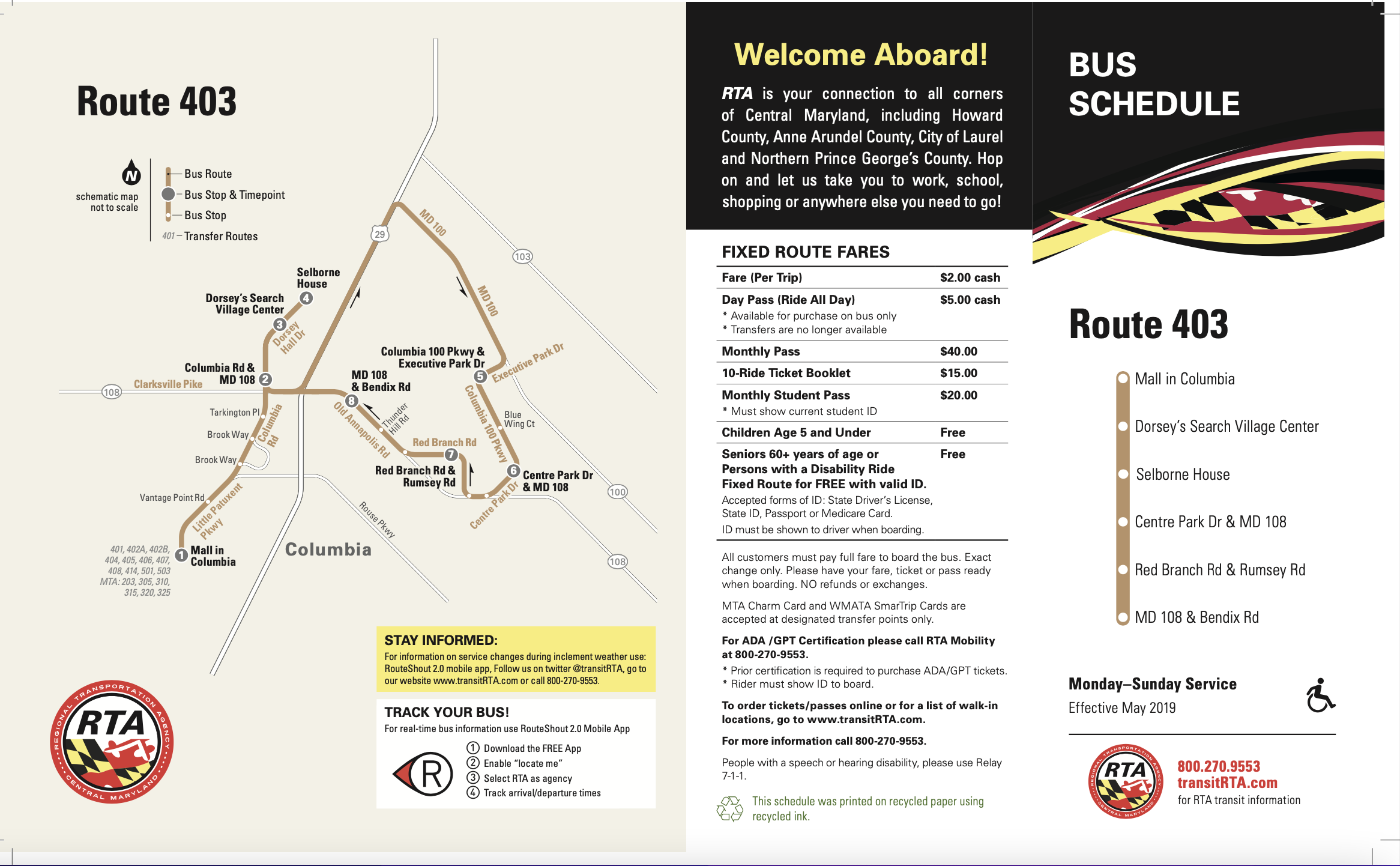
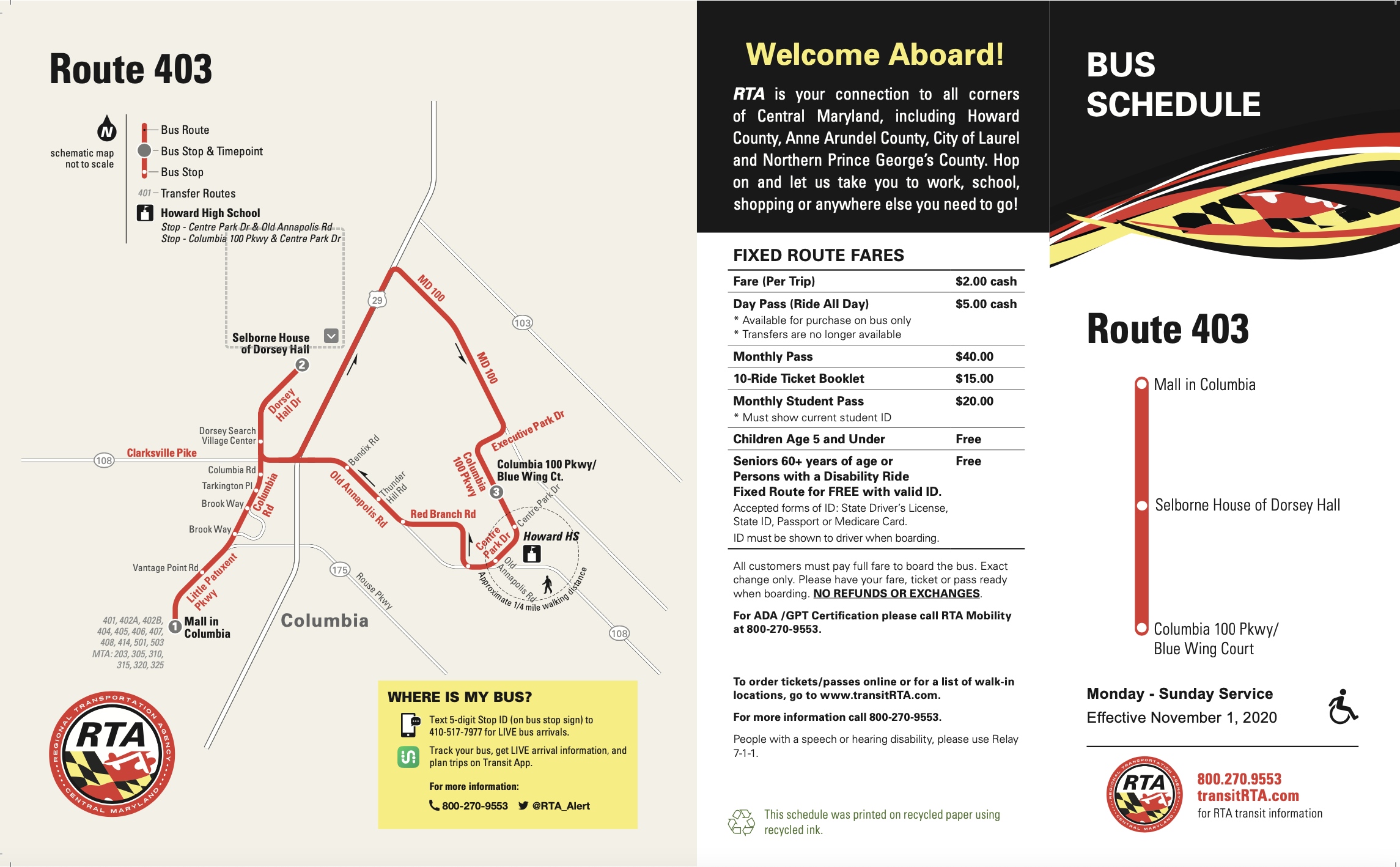
The two schedule images above reflect separate official versions of RTA Route 403:
Effective May 2019
Effective November 1, 2020
Both documents are publicly issued transit schedules for the same route and establish the final Saturday service times for the stops in question.
Across both versions, the last recorded departures for:
Columbia 100 Pkwy / Blue Wing Ct
Centre Park Dr & MD 108
remain within the same limited evening window, with final stops occurring at approximately 7:20 PM and 7:27 PM, respectively.
The presence of multiple official schedule versions—each reflecting consistent end-of-line service times—provides a fixed reference for when buses were operating on Saturdays. These independently published schedules do not extend service beyond those times.
Testimony and Hearsay Considerations
According to trial transcripts in State v. Traore, the timeline involving bus usage was introduced through witness testimony. That testimony referenced statements about transportation events rather than direct, independently verified evidence tied to the bus schedule itself.
Under Maryland law, hearsay is defined in Maryland Rule 5-801(c) as:
“a statement, other than one made by the declarant while testifying at the trial or hearing, offered in evidence to prove the truth of the matter asserted.”
In this context, the timeline presented through testimony relies on statements about when the bus was allegedly taken. The RTA schedules, by contrast, are objective, published records that establish when buses were actually scheduled to run.
When comparing these two sources:
The bus schedules provide fixed, independently verifiable timing.
The testimony reflects statements describing events tied to those times.
Both official schedule versions show that Saturday service for the relevant stops concluded by approximately 7:20 PM–7:27 PM. The schedules do not indicate availability of bus service beyond those times.
The absence of such objective materials from jury deliberations limits the ability to evaluate testimony against verifiable records. When relevant evidence is not made available, it can affect how timelines are assessed and how the weight of testimony is considered in relation to documented facts.